Thursday, February 5, 2009

Uprising by Margaret Peterson Haddix


Haddix, Margaret Peterson. Uprising. Simon and Schuster, 2007. 346 pp. Historical fiction.

Review by Lina

On March 25, 1911, a devastating fire at the Triangle Shirtwaist factory in New York City left 146 people dead, the majority of them young immigrant girls who were employed at the factory. In the years immediately preceding the fire, Triangle had been embroiled in a labor dispute that sent many of its workers out on strike in an attempt to unionize the shop. Among the strikers’ concerns were low wages, long hours, poor working conditions, and safety issues. Although Triangle and other companies eventually settled, violations continued. The fire encompassed three floors of the building and left many people trapped when stairwell doors were locked (the company’s way to ensure workers did not leave early) and the one fire escape proved to be defective. The tragedy of the Triangle fire lead to new safety regulations and enforcement of those regulations.

Uprising tells the story of two immigrant girls, Bella and Yetta, who worked at the factory and their friend Jane. Yetta, who came to New York from Russia with the plan to make enough money to send for her parents, is determined to improve working conditions at all costs, even her own happiness. She steadfastly pickets during the strike and is unhappy when the union settles for less than she wants. Able to see the whole picture, Yetta is also concerned about women’s rights and suffrage. She worries about safety conditions at Triangle. Bella, a poor girl from Italy who comes to the United States determined to send money home to support her widowed mother and younger siblings, is at a disadvantage not knowing English and being ignorant of the issues at hand. But she learns quickly and picks herself up following a family tragedy, determined to make a brighter future for herself. Jane is the daughter of a wealthy businessman, a socialite who yearns to go to college and do something important with her life. She leaves home to work as a governess and live in a tenement rather than be supported by her father’s money, money that she considers to be tainted and evil when she learns that in the past he had hired strikebreakers.

Uprising does a good job of telling the story of the famous Triangle fire as well as showing the working and social conditions prevalent at the time. Readers, particularly young readers, will find it hard to imagine living in the way that the girls did and not only surviving but thriving. Readers will assume they know which of the girls is the mysterious “Mrs. Livingston” first introduced in the beginning of the book but will be surprised when they learn her true identity. Recommended for age 12 and up.

Monday, February 2, 2009

Winter Wheat by Mildred Walker


Winter Wheat by Mildred Walker

Review by Julie Donaldson

Suggested audience: 16- adult

Winter Wheat is the story of a girl living on a dry wheat ranch in Montana in the early 1940’s. At the beginning of the story Ellen Webb is 18 and looking to her future—a future determined by each season, each crop of wheat, each hailstorm and snowfall.

This is a true coming-of-age story, covering a year and a half of Ellen’s life as she grows from a child to an adult. Raised by her stolid, quiet Russian mother and her frail New Englander father, Ellen knows little about the world and even less about love. She must come to understand her own parents’ relationship in order to understand herself and the world around her. In the process of understanding them, she learns that love, like dark winter wheat, can grow and survive amid the harshest of conditions.

Nature is an integral character in this story, and Walker writes as one who knows the land intimately. The natural world that she paints is full of symbolism and meaning. Walker’s characters are fully drawn—complex but knowable, and her language is almost poetic. Winter Wheat is a beautiful story of growth, understanding, forgiveness, and love.

Wednesday, January 14, 2009

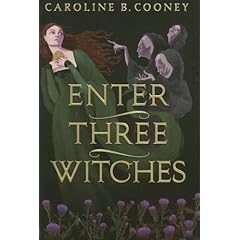
Enter Three Witches by Caroline Cooney


Enter Three Witches by Caroline Cooney

Review by Cindy Bohn


Lady Mary is a ward of the Macbeths. Yes, those Macbeths. The ones in the play. She is beautiful, rich, and sweet. She has a perfect life. Until her father is captured as a traitor to the king and executed. Her lands are given to Macbeth and she is expected to work in the kitchen. From idle rich to scullery maid in one day.


Lady Mary begins to notice some odd things happening in the castle. First she saw Macbeth speaking with some witches. Then she saw Lady Macbeth reading a letter, something quite out of the ordinary. And then the king himself comes to stay at their castle and his shockingly and cruelly murdered.


I really enjoyed this book for teens. I am a sucker for Shakespeare-based stories, and Macbeth is probably my favorite play. So when I saw this book, I had high hopes. Cooney does an excellent job portraying the customs and manners of the day. The new characters are woven nicely into the original story, and they become so real. Lady Macbeth is especially well done. I wasn't as perfectly pleased with Macbeth himself - I felt that his motivation and his character remained a little mysterious. But overall, I was swept away.


Enter Three Witches has some difficult themes-witchcraft, religion, loyalty, ambition. I would recommend it for any older teen or adult.

Wednesday, January 7, 2009

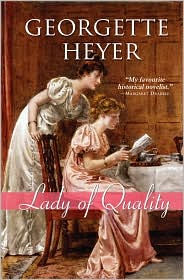
Lady of Quality by Georgette Heyer


Heyer, Georgette. 1957. Lady of Quality.

Review by Becky Laney of Becky's Book Reviews

"The elegant travelling carriage which bore Miss Wychwood from her birthplace, on the border of Somerset and Wiltshire, to her home in Bath, proceeded on its way at a decorous pace." (1)
Lady of Quality's first line may not sparkle as much as Austen's famous one, "IT is a truth universally acknowledged, that a single man in possession of a good fortune must be in want of a wife." But just give it time. Trust me. This one has everything and more that you'd expect in an Austen novel: wit, humor, romance, quirky characters, as well as a few genuinely likable ones.

Such is the case with Lady of Quality. Miss Annis Wychwood is almost thirty years old. And in that time, the Regency period, thirty might as well have been sixty. Spinster is spinster no matter if you're thirty, blond, and witty or wrinkly, gray, and stubborn. But Annis is comfortable in her singleness. Or at least she prefers to see herself as comfortable. It helps that in Annis' situation, she's wealthy enough to have her own house and household. (By household I mean servants and such). If Annis had to live under her brother's roof, well, it would be a different story altogether. She does NOT get along with her brother, Geoffrey, though she does get along in a way with her sister-in-law. Yes, folks might think it a bit strange that she'd rather be independent and living on her own--and a good day's travel away from her brother and his wife--but they've become accustomed to it. But when our novel opens, Annis is about to do something a bit more unexpected, a bit more shocking.

Lucilla Carleton is just a young thing--not even eighteen--when she decides to run away from her aunt. (Her aunt is her primary guardian.) Her aunt wants her to marry the son of her father's best friend. A man, Ninian, that she's practically grown up with. It's not that she doesn't like him. But she doesn't like him like him. At least she says as much. As does he when given the opportunity. (The two like to bicker about how they don't want to be together.) Annis comes across this bickering pair on her way to Bath. Their carriage (or vehicle) has broken down--a problem with one of the wheels. Annis is too much of a lady to leave the poor girl in distress. She invites the young woman to come with her, to stay with her. Through their trip and the first day back at home, Annis hears all about Lucilla, her aunt, Ninian, and his over-bearing parents the Lord and Lady Iverley. Lucilla has runaway it's true but it's because her aunt is passive aggressive. She manipulates through tears and pleas and looks.

What is Annis to do? Welcome her home to this girl she barely knows yet instantly likes? Or send her packing with much tears of distress? She decides that the girl must write a letter to an aunt. She'll be allowed to stay with Miss Wychwood in Bath, it's true, but it's a temporary solution to the girl's problem. But this nice letter home has unattended results. Her aunt being of the nervous sort on the best of days writes a letter--a tear-soaked and illegible letter to the girl's legal guardian--Lucilla's Uncle Oliver. Oliver Carleton.

The last thing Annis expected was to be visited by Oliver Carleton. A man (from London) with the reputation of the worst sort. A truly grumpy, stubborn sort of man who speaks without thinking of the consequences, who enjoys speaking the truth, the whole truth, and nothing but the truth come what may. Obey society's nicety-nice rules? Not a chance! A man with a sharp but witty tongue comes to Bath to get to the bottom of this mess. He doesn't want Lucilla. He's not there to take her away, he's there to investigate this woman, this stranger who has interfered and butted into his business, his family.

Let the fun begin.

Oliver and Annis. Oh the sparks will fly. Despite her claims of being ancient and spinsterly, Oliver can't help thinking that she's entirely unsuitable for chaperoning his niece. She should be the one being courted and pursued and wooed by men. She's beautiful. She's witty. She's intelligent. There's just a certain something about her that he can't ignore. Annis never in a million years thought she'd feel this way, this maddeningly confusingly wonderful feeling. She can't stand him; and yet, she keeps hoping she'll see him again.

For anyone who loves Much Ado About Nothing and/or Pride and Prejudice, Lady of Quality is for you. It is a wonderfully giddy-making novel.

Heyer's novels are rich in detail combining history and romance with wit and charm and some unforgettable characters. If you're looking for a place to start, I'd highly recommend beginning with Lady of Quality.

Friday, January 2, 2009

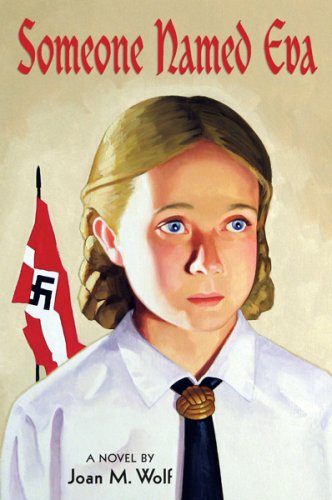
Someone Named Eva by Joan M. Wolf


Review by Katy from What KT Reads


Just a few weeks after Milada's 11th birthday, the Nazi's snatch her family from their home. The women and (young) children are separated from the men and taken to a school where they are held for several days. Because of her Aryan features, at the end of the time in the school Milada and one other girl are taken from their families and put on a bus to Poland, where their Germanization will begin. At Milada's new school, she is treated well: plenty of food, clean clothes, her own bed, etc; but at the same time, she is forced to take on a new name (Eva), learn and speak exclusively German and accept the views of her new teachers. Eventually, Eva is adopted into a German family where she deals with trying to remember the Milada from Czechoslovakia and guilt regarding the fact that she has genuinely come to love her new German/Nazi family.


I really liked this book. It's a fictionalized account of actual events, and I had a hard time putting it down. It focuses on an aspect of WWII that I knew nothing about, and I just ate it up. I actually spent several hours yesterday looking up more information about Germinazation, Lidice (the town Milada was born in), and various other things I learned about in the book. I love books that spark (or renew) an interest in something to the degree that I actually seek out more information about the subject.


Milada is a likable character and her struggles throughout the book felt real. Especially the the times when she is trying to figure out how she can hate the Nazis and everything about them while loving her new found family, who consisted of Nazis. The conflicts seemed real, and I spent the whole book longing along with Milada to know what had happened to her family and friends.


Be sure to read the author's note in the back to learn in more detail what happened in the town of Lidice, Czechoslovakia on June 10, 1942 and survivors the author interviewed while writing this book. It's both horrifying and fascinating at the same time.


Recommended for ages 11 and up

Wednesday, November 12, 2008

A Murder for her Majesty by Beth Hilgartner


A Murder for her Majesty by Beth Hilgartner (Houghton Mifflin Company, New York: New York, 1986)
Historical Fiction/Mystery

Review by Gamila from Gamila's Review


This historical fiction set in Elizabethan England begins with the main character headed toward the city of York to find help from Lady Jenny. Alice Tuckfield has just witnessed two men kill her father in the woods, and is trying to find someplace safe. Near the point of exhaustion, she runs into a boy on the streets of York, who he offers her something to eat. He offers to let her stay the night in their boarding house without the mistress knowing. They hide her in an upstairs closet. The boarding house is full of boys that sing in the church choir.
The boys plan a scheme to see how long they can hide her in the boys choir without Master Frost, the director noticing that she is a girl. They turn Alice into a boy and continue to let her hide in the upstairs closet. Alice realizes that she is in danger when she hears voices talking in the cathedral late at night. They are talking about her, and how they can't find her. They are the murderers of her father and a priest, Father Cooper, is working with them. Alice doesn't know what to do, but she is safe pretending to be a choirboy, but that might change if Father Cooper keeps snooping.
This is a really charming book and a very engaging read. The setting in York is extremely fun. The description of the choirboy's life is fascinating and the historical setting is flawlessly seamed into the story. The author is excellent at characterization. I loved Masters Frost and Kenton just as much as I loved Alice. The boys were fun-loving and playful characters that made Alice's life so interesting and much more exciting. This really is a delightful clean read.

Wednesday, September 17, 2008

A True and Faithful Narrative by Katherine Sturtevant


A TRUE AND FAITHFUL NARRATIVE By Katherine Sturtevant
(historical fiction for young adults and older ones too!)


Review by Joyce Moyer Hostetter
Author Historical Fiction
HEALING WATER (Spring 2008)
BLUE (2006)
BEST FRIENDS FOREVER (1995)
http://www.joycemoyerhostetter.com/
http://www.joycemoyerhostetter.blogspot.com/


It is 1681 and Meg Moore is often at work in her father’s London bookshop. Her position there puts her in touch with the literary world and agitates her desire to be a writer. However, because she is a woman, her father strictly forbids her to write anything for others to read.

Edward, a family friend, stops in at the bookshop before leaving on a trip to Italy . He asks Meg what gift he can bring her from his travels. Startled, Meg realizes he is suggesting a romantic relationship. She responds by joking that perhaps he will be captured at sea and thus return with an adventure for her to write.

In fact, Edward does get captured and is sold into slavery. Meg’s careless jest haunts her and she begins to raise funds to buy his freedom. Will, who also works in her father’s bookshop, helps her. An infatuation with Will ensues and the two of them envision a future together.

But then Edward returns and he wants Meg to write his story for him. Of course she must do this in secret or she will incur the wrath of her father. Meg and Edward begin meeting in a tavern where he relates his adventure and she writes it down.

But Edward’s experiences do not convey the tale that Meg has imagined. She is disappointed that his story lacks certain dramatic points. When he tells her his Muslim owner was actually a kindly person, Meg must let go of preconceived ideas about the Islamic world.

She discovers then, the writer’s dilemma. She can sensationalize Edward’s story so that it suits her fancy and captures her reader. Or she can render it truthfully, thus opening a window into the broader world. By the same token, Edward learns to trust the author of his story—to let go of particular details in order to shine a light on the more significant aspects of his experience.

I loved this book for the way in which the author slips so much information about time and place so naturally into the story. However, word choice and sentence arrangement convey as much about restoration England as the many historical details provided.

I also treasure the way in which the story, itself, explores what it means to be an author. For Meg, it is about much more than finding and conveying the truth of a narrative. Being a female writer in restoration England has limitations. There are areas in which she has no choice about her life. And yet, Meg is not powerless. In some ways this story is about accepting limitations and in other ways it is about choosing wider horizons.

A True and Faithful Narrative is at once a romance and a story of hard realities. Meg’s life is not all about the bookshop and the essence of writing. She has responsibilities to home and family. Her best friend, Anne (Edward’s sister) is caught in an unhappy marriage which gives Meg reason to examine her own romantic choices.

There are many layers here which will be best appreciated by mature young readers. A True and Faithful Narrative is a book that writers, like myself, will want to own so we can revisit it when in need of inspiration and grounding.

Tuesday, September 9, 2008

The Time Travelers, The Gideon Trilogy, by Linda Buckley-Archer


The Time Travelers by Linda Buckley-Archer (previously published as Gideon the Cutpurse)
Review by Katy, What K Reads


This book follows Peter and Kate children of the 21st century who are accidentally sent back to July 1763. Before they are able to get their wits about them, the horrible Tar Man takes off with the anti-gravity machine and their only way home. Peter and Kate meet up with Gideon Seymour and make their way across the English country side in attempt to get home.


I liked this book. A lot. Gideon may be my new favorite character. He is clever, funny, and most importantly a moral man. He really seems to want to do what's right, even though it seems like life is against him at times. I read a review on Amazon that thought Gideon was really flat, so maybe I read more into him than was there, but I thought he was a well developed, likable character.


As to the two main characters, I liked Kate a lot. She was a fairly fleshed out character and was a strong leader throughout. Her little temper tantrums got a little old, and it bothered me that she had so little confidence in Peter. But, as the story progressed, she did seem to grow up, and I liked her overall. Peter wasn't as well developed. He had a pretty big chip on his shoulder (why don't my parents love me?) and he didn't seem to develop as much. That being said, based on the ending, I think there is a good chance that Peter will grow a lot in the second book.The Tar Man was also really interesting. He seems to have a very developed back story, and I look forward to learning more about him. I suspect there is a lot more to him than meets the eye.


It appears that the author did a lot of research into the lifestyles of people in 1763 England. She included it in a way that was funny and entertaining as opposed to "educational" feeling. For example the word "bottom" was used for courage in those days. Throughout the story phrases like "I want you all to show some bottom on this adventure" popped up. It might be the 10 year old boy in me, but I thought it was hilarious. I do wish the King's Evil (or Scrofula) had been explained a little better. I finally looked it up online; (according to wikipedia) it usually refers to a form of TB that people in the middle ages thought could be cured by a royal touch.


This is the first book in a trilogy. The ending makes it clear that a second book will be written (it's out now, called The Time Thief), so it might not be satisfying to all readers. It wasn't a true cliffhanger, but it definitely made me want to get my hands on the sequel. I look forward to more adventures from Kate, Peter, and Gideon.

Monday, August 18, 2008

Primavera by Mary Jane Beaufrand


Beaufrand, Mary Jane. 2008. Primavera.

Review by Becky Laney, frequent contributor.


The Italian Renaissance. Two powerful families are about to feud--the Medici and the Pazzi--and our heroine, Lorenza, nicknamed Flora, is soon to be caught in the middle. Power. Wealth. Prestige. That's what it comes down to for most of the men and women in both families. Flora, on the other hand is different. Perhaps it is those differences which serve to her advantage when the power struggle plays out disastrously for her family. She, in fact, saves the life of her family's enemy. But while this act of kindness may protect her life--in the moment--her family--her entire family is at risk. When the Medici's strike back, everything she's known, everything she's loved (as well as a few things she's hated) will be stripped away. Does Flora have the strength, the courage to begin life anew? Is she as strong as her grandmother believes? Does she have anything to live for after all?


I loved this book. I did. The setting was remarkable. Okay, maybe that's the wrong word. For me, I found the setting fascinating. I found it rich and deep and lustrous. I'm not that familiar with it generally speaking, and the details swept me away. Maybe that won't be the case for other readers. But for me it was one of those books that was in the right place and the right time to completely capture my attention. Flora is a well-drawn character. She's strong. She's resourceful. She's complex. I was completely taken in by her and her world.


This is Mary Jane Beaufrand's first book.
The story is inspired by Botticelli's masterpiece La Primavera.

Wednesday, August 6, 2008

I'm Back with a Review--Crispin by Avi


Review by Becky Laney, frequent contributor.


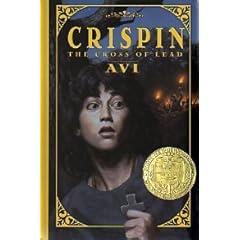
I honestly didn't know what to expect from this one. Not the most clever way to start out a review, but true nevertheless. The cover. I was not easily won over with the cover. It is ugly and unappealing. It doesn't shout out "read me, read me." But I'd heard good things about it, of course, and it did win the Newbery in 2003. So I knew that I had to get past my initial misgivings.


Here's how it begins:


England, A.D. 1377 "In the midst of life comes death." How often did our village priest preach those words. Yet I have also heard that "in the midst of death comes life." If this be a riddle, so was my life. The day after my mother died, the priest and I wrapped her body in a gray shroud and carried her to the village church. Our burden was not great. In life she had been a small woman with little strength. Death made her even less. Her name had been Asta.


Our narrator is a young boy. At first, we only know him as Asta's son. Later his real name is revealed, Crispin. Here is a young boy, a peasant, tied to the land for life. But the day after his mother's funeral everything changes. (Or maybe it's the day of his mother's funeral.)


Told by John Aycliffe (boo, hiss) that he must return the ox to the manor since his mother is dead (and he's now an orphan) he is told that he can starve. His life, his welfare is of no concern for this substitute lord-of-the-manor. Upset, he runs into the woods. He's working out his emotions--anger, grief, confusion, etc., but a fall and a bump on the head changes his life. Or you could say saves his life. He wakes up at some point during the night. He sees two men. One is John Aycliffe (boo, hiss) and the other is unknown to him at that time. What he hears confuses him. He can't make sense of it. But when he is seen, he gets a sick feeling that his life is in danger.


He is able to get away and hide for the rest of that night and the day. But the next night, he makes his way to his trusted friend, the priest, Father Quinel. What the priest tells him doesn't erase his questions. If anything, it just adds to his confusion. He's told that his mother could read and write. He's told that he was baptized (albeit secretly) Crispin. He's told that he MUST flee for his life. That John Aycliffe (boo, hiss) has started spreading lies about him. Accused him of theft. Is offering an award for whoever kills him. The priest gives him a few things to do on his own, and makes arrangement to meet him again before the two part ways forever.


His errand? To go to Goodwife Peregrine's house and pick up a cross of lead. But on his way to meet the priest one last time, the time where all would be revealed, he is met by another man instead. A man who claims he comes in the priest's place. But something doesn't feel right.


Crispin doesn't know who he is or exactly why John Aycliffe (boo, hiss) is out to kill him. Why Aycliffe (boo, hiss) wants him dead so very badly. He doesn't know who he is or where he needs to go, he just knows that his life is in danger and he is being pursued relentlessly.


Crispin's journey could have been a lonely one. But he meets an unusual friend, a man called Bear, who takes him under his protection. Together they try to make sense of it all. But the journey won't be easy.


I loved this book. I can easily see now why it won the Newbery. I definitely recommend this one to lovers of historical fiction. Also for those that love coming-of-age novels.

Tuesday, July 8, 2008

Calico Canyon by Mary Connealy


Review by Emily, DCR's Head Mama


I receive quite a few Review Copies of books I don't request. Because they are not books I choose to fit my personal tastes, few really appeal to me.


Schoolmarm Grace Calhoun may seem like just another tightwad teacher at first, but there is so much more to her. Adopted by an abusive father, she has overcome many trials and discovered how brave she can be.


She always wanted to be a teacher, but now that she is realizing her dream, she can't get the 5 Reeves brothers in her class to behave. Their father is no better. She calls him the leader of the rats. "The man had the intelligence of the average fence post, the personality of a wounded warthog, and the stubbornness of a flea-bitten mule. Grace silently apologized to all the animals she'd just insulted."


When Grace's father shows up intending to kill her, she makes a wild escape that leads her to a winter she'll never forget...stuck with the Reeves family.


Calico Canyon is a great romantic comedy. It is apparently the sequel to Petticoat Ranch, which I've never read. So, I'd probably start with that one, although this book can stand alone.


It is set in the year 1867 in a small town in Texas.


The story reminded me of Seven Brides for Seven Brothers at times. So, if that is your kind of thing, try this one out. It's a lot of fun.

Wednesday, June 25, 2008

A Year Down Yonder by Richard Peck


Review by Becky Laney.


A Year Down Yonder is the sequel to A Long Way From Chicago. However, this is not a novel in stories. Nor is it narrated by Joey Dowdel. No, A Year Down Yonder is the story of Mary Alice, the little sister that is almost-but-not-quite all grown up. The year is 1937. The Depression is making life difficult both in urban and rural areas. It is economic necessity which prompts Mary Alice's parents to send their daughter away. (Joey is sent away also, but not with Mary Alice.) Mary Alice is being sent to live with the vivacious, one-of-a-kind, sometimes embarrassing Grandma Dowdel. How will this "city" girl fit in with these country bumpkins? Will they accept her? welcome her? Not if the Burdicks have their way!


A Year Down Yonder is a treat. It's rich in detail, rich in humor, rich in heart and humanity. The characters, the place all come alive. Richard Peck is a pro when it comes to capturing the good, the bad, the ugly, and the laughable. Mary Alice does have a few adjustments to make, but this book captures her unforgettable journey, her coming-of-age in small town America.


If you haven't read A Long Way From Chicago, this book does stand alone. In case you're wondering. But I would recommend reading both books. Both books are such a joy, a treat, a delight.

Monday, June 9, 2008

Keeping Score by Linda Sue Park


Review by Becky Laney, frequent contributor

I have read most of Linda Sue Park's novels, and I've enjoyed all of them. Some more than others, but I've enjoyed them all. (It's just a matter of degree.) I liked--really liked--this one. I didn't know quite what to expect. It is about baseball. Not about playing baseball necessarily, but about being a fan of the sport. About being a fan of the game, the players, the teams. Our narrator, our heroine, is Maggie, or "Maggie-O" as her father likes to call her. She's a Dodger's fan, a Brooklyn Dodgers fan. The novel is set in the early to mid fifties. (1951-1955). Her mother and brother are Dodgers fans as well. But her father is a Yankees fan. (Hence her name "Maggie-O" and his son, Joseph Michael.) Her father was a fireman. But after a serious injury (all occurring before the novel's start) he now has a desk job. Maggie, however, still visits the fire house, the firemen regularly. Not a week goes by when she doesn't go to hang out with her father's friends, her father's coworkers. She loves to listen to the baseball games on the radio with them. One of the men is new. His name is Jim. He's different from the others--he's a Giants fan. But oddly enough, though he's a fan of the wrong team, it's him that Maggie is most drawn to. He teaches her how to keep score, how to follow the game play by play on paper keeping precise records. Their friendship is real though sports-based. So the news that he has been drafted into the army effects her quite deeply.
Maggie has led a sheltered life. But Jim being sent to Korea opens her eyes a bit to the world around her. Not all at once. But slowly and surely, she is growing and changing and coming of age.
Baseball. War. Friendship. Family. This novel has a little bit of everything to offer readers. It is deeper than I thought it would be. The first half of the novel is just a sports novel. But the second half, it's about so much more. Anyway, I think Keeping Score has something for everyone. Even if you're not a big sports fan.

Wednesday, June 4, 2008

Good Masters! Sweet Ladies! Voices from a Medieval Village


Author: Laura Amy Schlitz

Illustrator: Robert Byrd

Genre: Juvenile Drama

Pages: 85

Date Finished: 17 March 2008

My Rating: A +

Newbery Medal Winner 2008


Review by Jeanette from A Comfy Chair and a Good Book


In the forward to this wonderful collection of one-person plays, Laura Amy Schlitz said that these plays were written for the students at park School, where she works as a librarian. "They were studying the Middle Ages, and they were going at it hammer and tongs. They were experimenting with catapults and building miniature castles, baking bread and tending herbs, composing music and illuminating manuscripts. I wanted them to have something to perform."


Something to perform is exactly what she gave them! These monologues are absolutely fascinating and delightful.One of my favorites was Thomas, the Doctor's Son."

After the prayer, let the patient rest,

And tell his family, 'I will do my best

To fight this sickness, but I fear his fate-

It may be that you called me in too late'

Then shake your head, look serious and wise-

This sort of talk protects you if he dies.

If he recovers, it was all your skill

That brought him back to life. And that's better still."


Another was Barbary, the Mud Slinger."It made me think

how all women are the same-

silk or sackcloth, all the same.

There's always babies to be born

and suckled and wiped,and worried over.

Isobel, the lord's daughter,

will have to be married,

and squat in the straw,

and scream with the pain

and pray for her life

same as me.

And thinking of that,

I added one more prayer-

sweet Jesus, come Christmas,

don't let it be twins."


I also really enjoyed Mogg, the villein's daughter, Piers, the glassblower's apprentice and Mariot and Maud, the glassblower's daughters.


This little volume is storytelling at its best. Not only do you get a wonderful, captivating story (or 22 of them in this case,) but you are also learning about the life of children in the Middle Ages. Through these monologues we learn about farming, pilgrimages, marriage, religion, freedom, hygiene and the crusades of the Middle Ages. And Schlitz definitely did not pretty-up the Middle Ages for her young audience. There are fleas, dung, polluted rivers and religious intolerance.


I can only imagine how fun it must be for school children to perform these little plays.


I can not forget to mention the wonderful illustrations by Robert Byrd.


They are beautiful and fit the piece perfectly.


Wednesday, May 21, 2008

I Am Not Wolf by Roger Terry

I Am Not Wolf” by Roger Terry
Review by Natalie Smith, regular contributor

I was intrigued first because of this title, and second because of the picture on the front. It’s true that generally you can’t judge a book by its cover, but this one was really interesting to me, and I borrowed it from the library.

Because “I Am Not Wolf” was in the LDS section of our library, I was expecting to read a story about conversion to the LDS Church, and instead I came away with a very different idea of what West Germany was like during the 1970s. This book barely mentions the LDS Church, except to state how the missionaries look from the eyes of an outsider with a very different lifestyle.

I Am Not Wolf” follows a young American, David, who goes to West Germany and meets his best friend, Wolf. They have some adventures, and while the book is somewhat formulaic in places, it’s also such an interesting study in culture and personality that it keeps the attention. I recommend this one to adults because of their comprehension of repercussions of the Berlin Wall, although it would be appropriate for young adults, as well, especially if they have studied this time period.

Wednesday, April 16, 2008

Daddy-Long-Legs by Jean Webster


Daddy-Long-Legs by Jean Webster


Review by Natalie Smith, our new regular contributor

I found Daddy-Long-Legs in a paperback reprint on the shelf of the YA section of my library – and loved it so much that ten years later I special-ordered copy and ended up with a second edition, published in 1912! Daddy-Long-Legs begins on the first Wednesday of the month, the day on which The Trustees visit the John Grier Home. It’s an orphanage where Jerusha Abbot lives with ninety-six other children, but she’s seventeen and on the brink of being thrust out into the world, and doesn’t quite know what will become of her. One of The Trustees is a philanthropist, and after reading an essay she’d written about “Blue Wednesday”, decides to send her to college to become a great writer.

The first chapter of this story is told in third person, but the rest of it is a compilation of all the letters Judy, as she decides to call herself, sends to her benefactor, whom she decides to call “Daddy-Long-Legs”. The letters are rich and full of all the innocence and excitement that comes of being seventeen in this era, and from being free for the first time in her life from her usual duties to the John Grier Home. Taking care of one person is considerably easier than taking care of eleven small children – and Judy really enjoys almost every aspect of her independent college life.

Some of my favorite things about this sweet book are the way I learned so much about the historical time period through the things Judy writes, and the similarities between my own college experience and Judy’s. There are about ninety years between Judy’s college days and my own, and while there were definitely some things that haven’t endured the years, overall I found more similarities between fictional Judy and real-life me than I was expecting.

I recommend this book to ANYONE who enjoys Anne. It’s much faster-paced, but the tone is very similar to L.M. Montgomery. And if you don’t know who Anne is (heaven forbid!), you should read her, too!

Monday, April 14, 2008

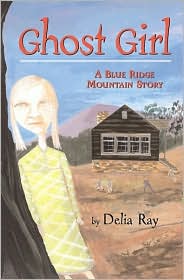
Ghost Girl by Delia Ray


Review by our resident author, Joyce Moyer Hostetter

April Sloane lives a hard life in the Blue Ridge Mountains of Virginia. Not only is she ridiculed for her white blond hair and eyelashes but she also carries guilt related to her brother’s death. Her mother is depressed, angry, and emotionally unavailable.

But, at least, there is Aunt Birdy (actually her grandmother) whose home is a refuge and a place of joy. And unexpected hope arrives when April learns that President and Mrs. Herbert Hoover, who have a mountain retreat in the area, are building a school for the local children.

Aunt Birdy convinces April’s mother to let her attend the school. There she finds a friend in the teacher, Miss Christine Vest. April is enthralled with her teacher and surprised to learn that this refined, educated woman also comes from humble beginnings.

Miss Vest, the Trumans, and Aunt Birdie bring hope to April’s otherwise oppressive life. But ultimately, April’s brokenness is in her own hands. Only she can decide to repair or reject her family relationships.

Delia Ray has skillfully woven fact and fiction to bring to our attention an otherwise obscure bit of presidential history. Through an extraordinary main character and a compelling story Ray reveals how education and compassion transformed an isolated mountain community.

Highly recommended historical fiction for upper elementary and middle school readers.

Monday, April 7, 2008

Courting Emma by Sharlene MacLaren


Review by Becky Laney, frequent contributor.


Courting Emma is the third book in the Little Hickman Creek series. (The first two are Loving Liza Jane and Sarah, My Beloved.) Each book in the series features a new heroine. Liza Jane was a school teacher. Sarah was a mail order bride. And Emma--featured in both Loving Liza Jane and Sarah, My Beloved--runs the town's boarding house. She's known for being a bit grumpy, a bit moody. But my mom and I both agreed while reading the other two that Emma needed a book of her own. She was screaming to be the heroine of her own book. So we were both ecstatic to see that Courting Emma was on the way!


If Emma has issues, she has just cause certainly. Her father--who raised her alone after her mother's death--was an alcoholic. Is an alcoholic. Known prominently as the town drunk. Emma worked hard to separate herself from her father, from her upbringing. Worked hard to make herself respectable. When our story opens, we see this immediately. It's the fourth of July and once again her father is being a drunk and causing a scene in front of everyone. Emma has to "fetch" him away and try to save face. It is embarrassing to hear everyone talk, everyone whisper about what a hopeless disgrace her father is.


The knight in shining armor? Jonathan Atkins. (Another character that deserved his own book.) A man who grew up in this community, gone away to school, and returned as preacher. He wishes that he could help Emma out. He wishes that Emma would open her heart to him and to the gospel.


Courting Emma is a story of grace, of forgiveness, of broken hearts healing. It is a novel all about second chances. A novel that proves it's never too late.


I highly recommend this series. All three books are enjoyable. I loved them all.

Wednesday, April 2, 2008

The End of the Spear by Steve Saint


THE END OF THE SPEAR by Steve Saint

Review by our resident author, Joyce Moyer Hostetter

In 1956 five American missionaries to Ecuador were speared to death by members of the Waodoni tribe. Since then, millions have drawn inspiration from the slain missionaries and from their wives who chose to befriend the killers.

The End of the Spear by Steve Saint, unravels much of the mystery around the event and also the motivations of both the missionaries and the Waodoni. Steve is the son of Nate Saint, one of the men who was murdered. As a boy of 9, Steve went to live with his Aunt Rachel who herself chose to live among the Waodoni. His early immersion into the culture gives him a unique perspective and a fierce love for the people who killed his father. The End of the Spear reveals which of the men killed Steve’s dad and also that Steve now loves this man as a father.

After Steve had lived apart from the Waodoni for decades, they asked him to return – to teach them skills held by outsiders – especially health related skills such as uses of medicine, treating wounds, and dentistry.

Steve agreed and took his amazing wife and teenagers with him. But he was determined not to simply make the Waodoni dependent on him or any other outsider. His affection for them was so fierce that he wanted only to preserve the tribe – not to turn them into a welfare society or to put them at greater risk for those who might prey upon them.

It took me a little while to really get into this book; there were many strange names to pronounce and Saint moves back and forth in time to unravel the story. But eventually it settles into a thoroughly absorbing read!

One of the things I especially loved is the way in which Saint writes about faith. While this is clearly a book about the expression of Christianity there is nothing cliché about it! There is no religious jargon – only the Waodoni’s beautiful way of expressing their relationship with God.

This story is deep and multilayered - filled with inspiring examples and profound truths.

For information about how the Waodani are learning to be independent and to use technology that is feasible for their setting, visit http://itecusa.org/who.htm

Wednesday, March 26, 2008

All of a Kind Family by Sydney Taylor


Taylor, Sydney. 1951. All Of A Kind Family.


Review by Becky Laney, frequent contributor.


Originally published in 1951, Sydney Taylor's novel, All of A Kind Family, is set in New York City around 1912. The family consists of a mom, a dad, and five "step and stair" daughters. (They range in age from twelve to four.) The book is about the adventures the five sisters have together. It's definitely not your typical book if you're judging it by modern standards. There is less plot, for one thing, but the charm--or part of the charm--is in the individual stories, the episodes. The fact that it is more a compilation of loosely connected stories masquerading as a novel isn't a problem in my opinion. (But I'm curious what modern children would make of it all???)


The book does have its charms. There's no doubt about that. And one of the things I do like about the book is the fact that it highlights so many different aspects of being Jewish. For example, I haven't come across too many fiction novels (or picture books for that matter) that show families celebrating Purim and Succos. (These aren't the only celebrations by any means.) It was just interesting to see these aspects of culture and religion interwoven with the typical and traditional threads of family life and social life--going to school, going to the library, going to the beach, going shopping, getting a new baby, etc.


Part of me is curious as to how modern readers would respond to this novel and others like it. Would it be considered too old fashioned? Too dated? Too boring? While I can appreciate it the novel as an adult, I'm not sure what I would have thought of it as a child.

blogger templates | Make Money Online